Care for creation
10/27/2026
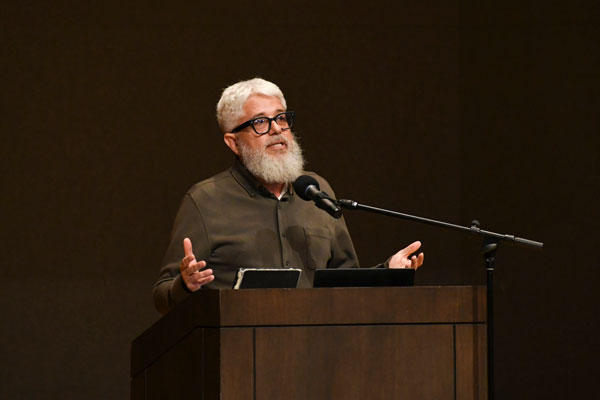
The presentation invited the Bluffton University community to consider how attention to the natural world, faith and meaningful action can work together to foster hope and care for creation.
Bluffton University Forum explores faith, hope and care for creation
Bluffton University welcomed Rev. Douglas A. Kaufman, Mennonite pastor and Anabaptist Outreach Specialist for Faith in Place, who presented on exploring the connections between faith, environmental stewardship and the lives of creatures that share the earth with humanity.
Kaufman encouraged attendees to look more closely at the natural world and consider how caring for creation can deepen their understanding of spirituality.
Drawing on his experience as a community scientist monitoring the Elkhart River, Kaufman highlighted the ecosystems found beneath the surface of rivers and streams. He shared examples of aquatic life, including caddisfly larvae, which build protective cases from stones and plant materials. These creatures also serve as bioindicators, helping scientists assess the health of aquatic ecosystems.
Kaufman connected these observations to environmental challenges, including pollution, habitat loss, climate change and declining biodiversity. He discussed the vulnerability of amphibians and other species while emphasizing the importance of recognizing the effects of human activity on the natural world.
Throughout the presentation, Kaufman invited audience members to participate by sharing favorite creatures and natural places, as well as environmental concerns and sources of hope. The conversations encouraged attendees to reflect on their own relationships with the environment and the changes they hope to see.
A central theme of Kaufman’s presentation was the biblical understanding of creation as more than a backdrop for human life. He traced the significance of rivers throughout scripture, from the Garden of Eden to the Jordan River and the imagery of a river flowing from God's throne in Revelation. These passages, he explained, point toward a vision of God's care that encompasses all creation.
Kaufman also explored the concept of the “gospel of all creatures,” drawing on the work of Anabaptist thinker Hans Hut, who wrote about the relationship between Christ’s suffering and resurrection and the suffering of creation. This perspective, Kaufman explained, offers hope by reminding people that God's work extends beyond human concerns to the wider community of living things.
While acknowledging the seriousness of environmental challenges, Kaufman encouraged attendees to recognize signs of progress, including the growing use of solar and wind energy. He emphasized that hope is not a reason for inaction, but a foundation for working toward a healthier future for people and the natural world.
Kaufman concluded by discussing his work with Faith in Place, a Chicago-based organization that partners with faith communities to advance environmental justice through education, community engagement, practical resources and advocacy. The organization works across religious traditions to help communities become more just, resilient and sustainable.
The presentation invited the Bluffton University community to consider how attention to the natural world, faith and meaningful action can work together to foster hope and care for creation.