Bluffton University news
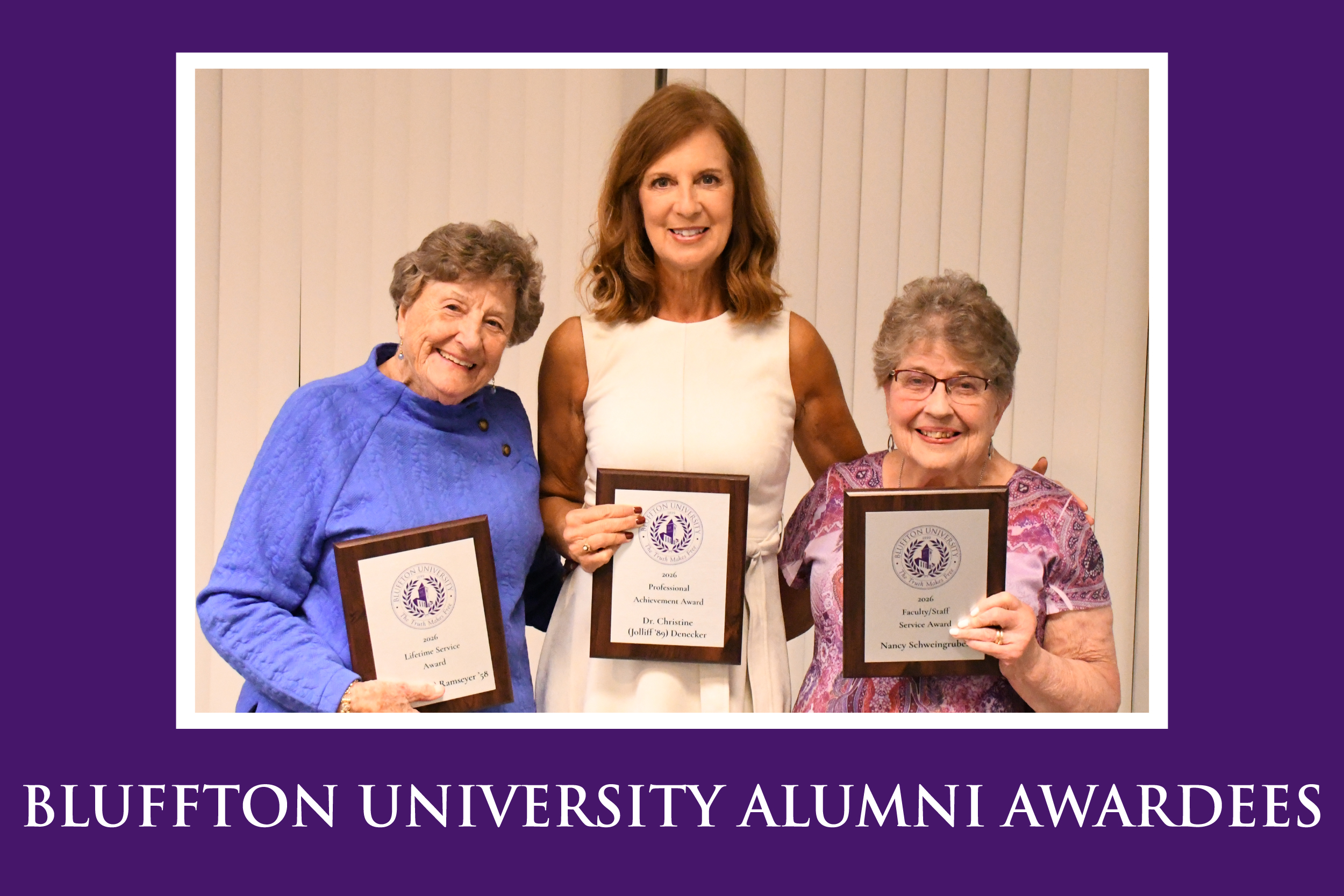
Alumni Awards
Bluffton University recognized three individuals for their outstanding commitment to vocation, community and the university during the President's Banquet Saturday, Oct. 3.
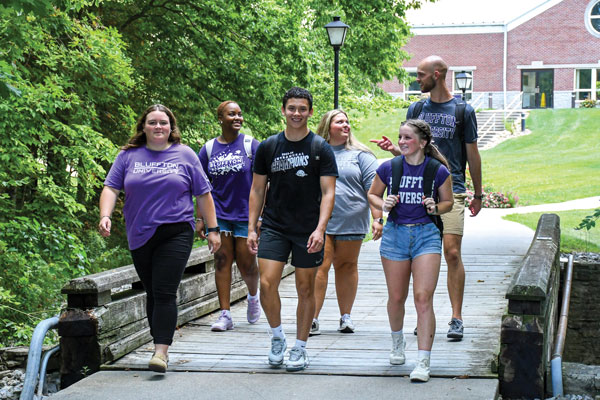
U.S. News & World Report
Bluffton University continues to earn national recognition for its commitment to providing students with a personalized, supportive and affordable college experience.
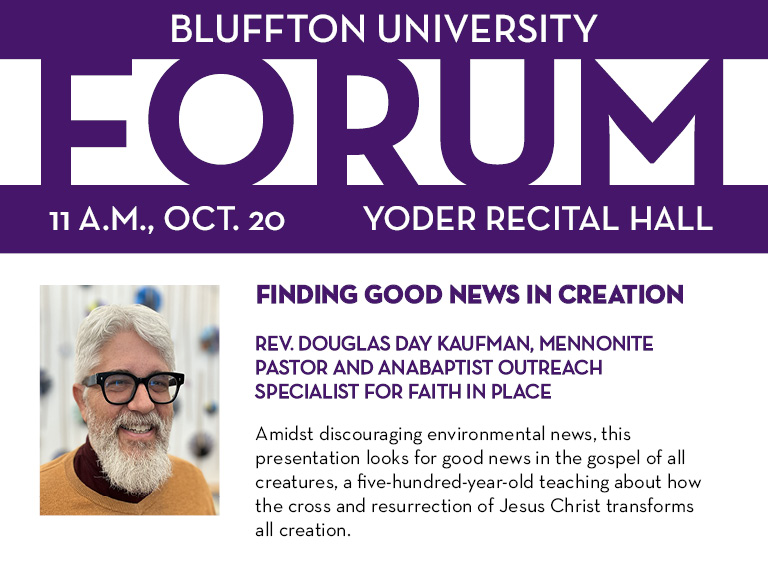
Creation Forum
Rev. Douglas Day Kaufman, Mennonite pastor and Anabaptist Outreach Specialist for Faith in Place, will present "Finding Good News in Creation."
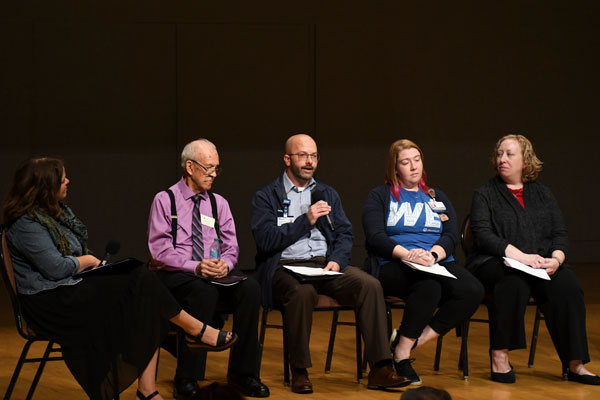
NetVUE Chaplaincy Panel
During a NetVUE panel, four alumni shared their experiences working in health care and senior living, offering students insight into the many ways a calling can take shape.
First Tuesday Forum
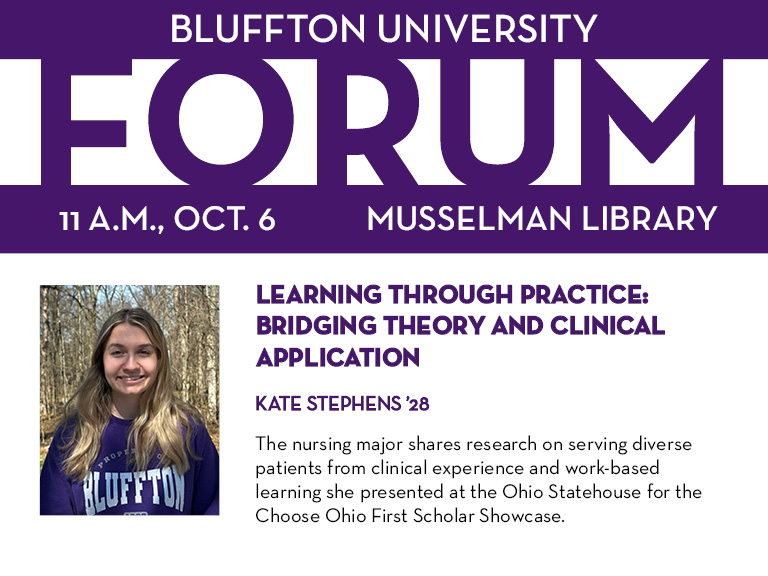
Bluffton University nursing major Kate Stephens '28 will present "Learning through Practice: Bridging Theory and Clinical Application."
2026 Fall Enrollment
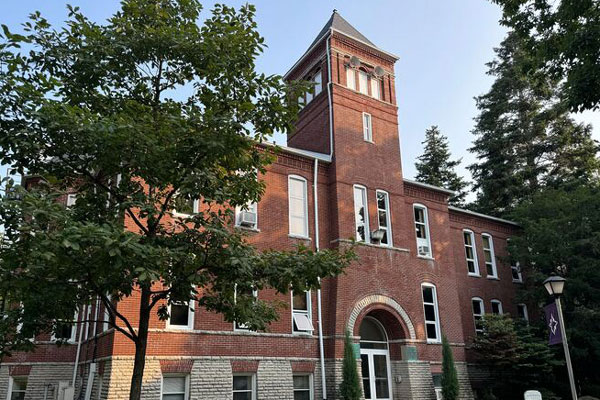
Bluffton University welcomes a new class of students to campus for the 2026-27 academic year.
Peace and Citizenship
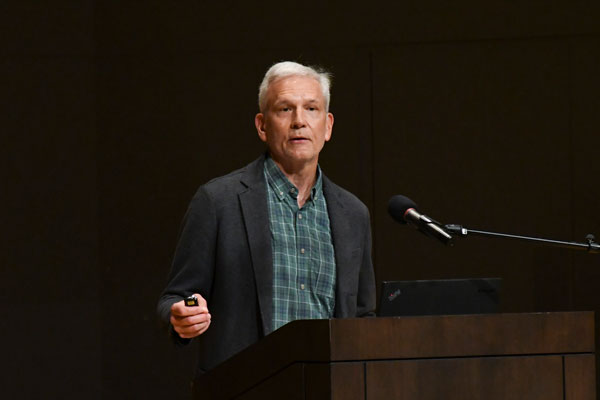
A question posed nearly a century ago to Bluffton University alumni Rick Ramseyer's grandmother continues to raise important questions about citizenship, conscience and what it means to serve one's country.
Cross-Cultural Forum
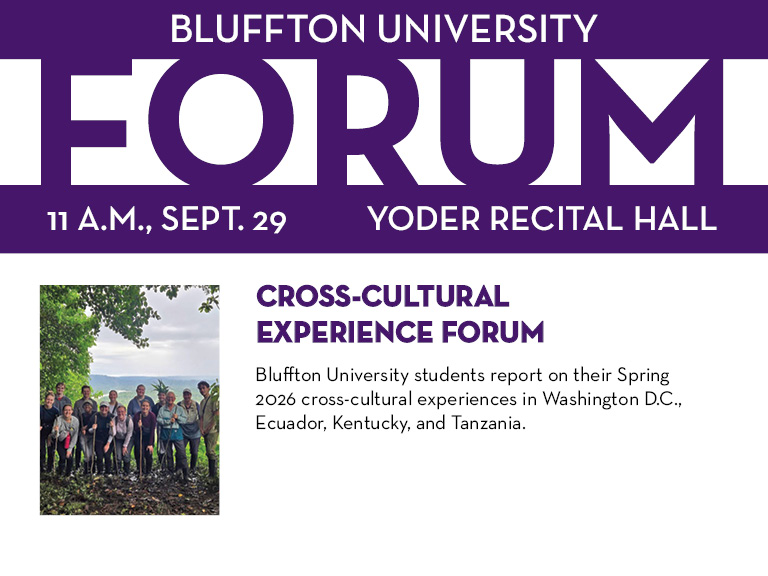
Bluffton University students will share their experiences from Spring 2026 cross-cultural programs.

Exploring Changing Innovation
Raj Biyani, chief innovation officer at Goshen College, shared his research exploring the rapidly changing role of artificial intelligence and what it means for organizations, education and future leaders.
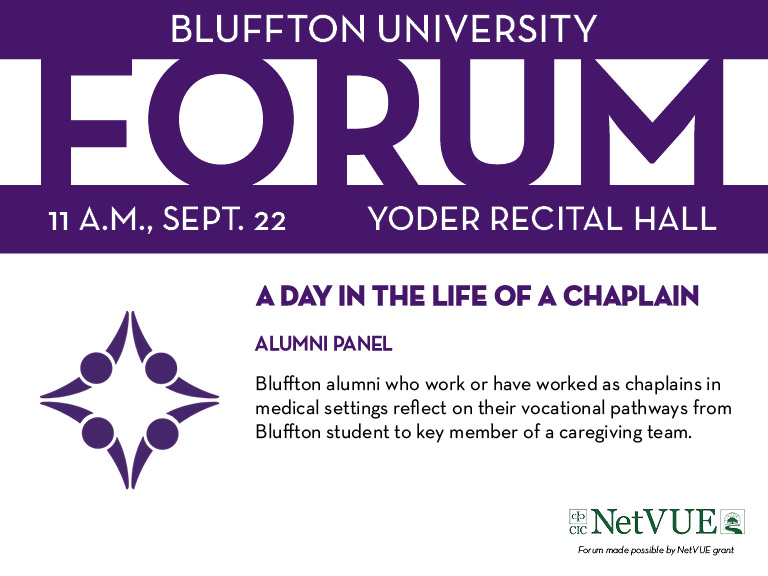
NetVUE Panel Forum
Bluffton University alumni working in medical chaplaincy will share their vocational journeys during a NetVUE Alumni Discernment Panel.
100 Years of Being Beavers
Bluffton University will celebrate Homecoming and Alumni Weekend Oct. 2-4, honoring 100 years of being Beavers.
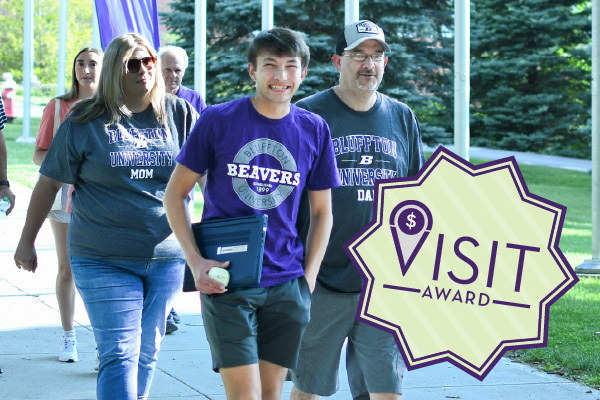
Visit Bluffton. Get $1,000!
New Bluffton initiative makes college more affordable while encouraging prospective students to experience campus firsthand.
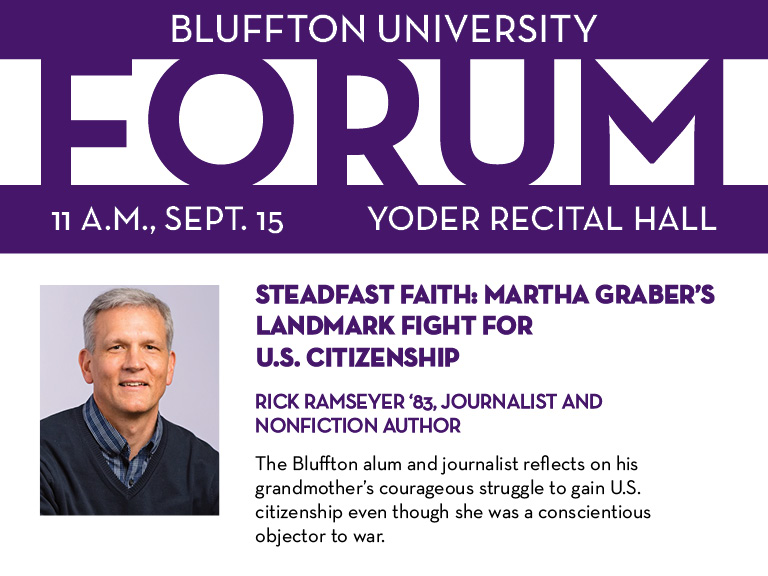
Constitution Day Forum
Bluffton University alumni and journalist Rick Ramseyer '83 will present "Steadfast Faith: Martha Graber's Landmark Fight for U.S. Citizenship."
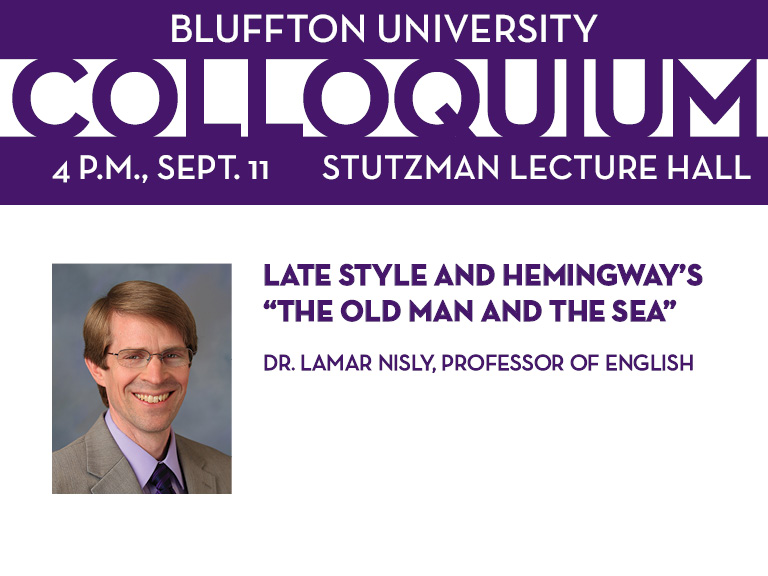
Faculty Colloquium
Dr. Lamar Nisly, professor of English, will present a faculty colloquium titled "Late Style and Hemingway's 'The Old Man and the Sea.'"

Classroom Technology Refresh
Donor support has allowed Bluffton University to complete a campuswide classroom technology upgrade, providing students and faculty with modern tools designed to enhance learning.
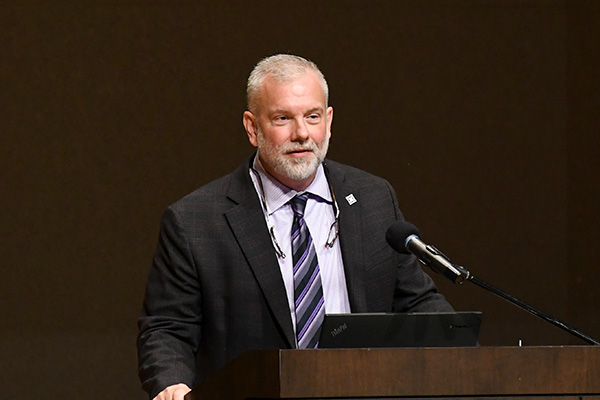
Bettering Bluffton Together
Bluffton University President Dr. Alex Sider challenged the university community to look beyond where Bluffton has been and consider what kind of university and what kind of people it is becoming.
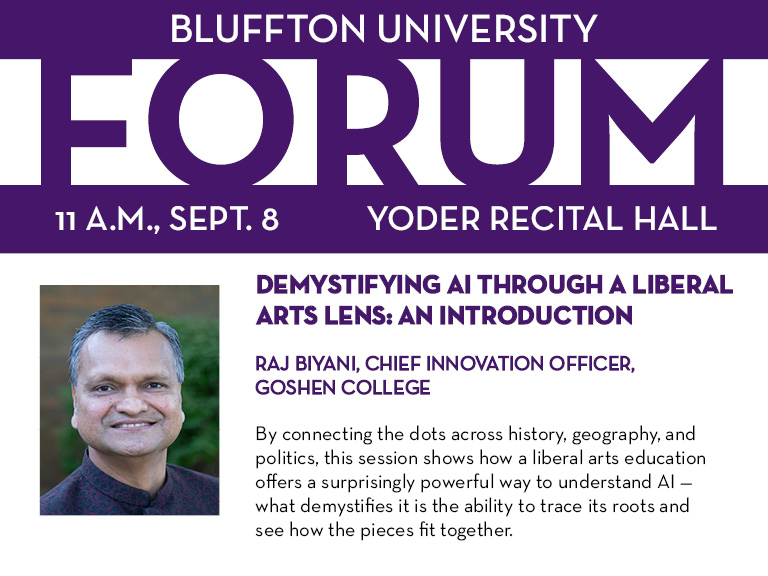
Innovations Forum
Raj Biyani, chief innovation officer at Goshen College, will present "Demystifying AI Through a Liberal Arts Lens: An Introduction," Tuesday, Sept. 8.
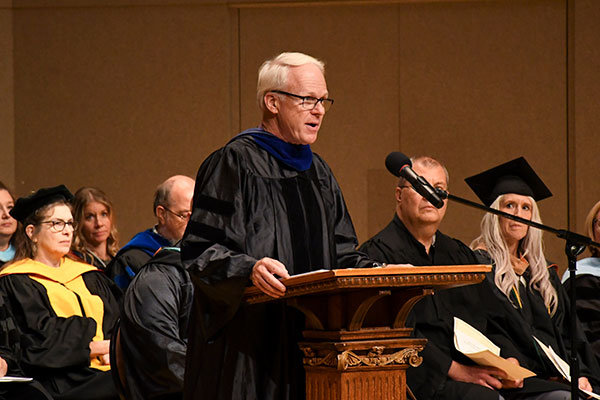
Importance of Integrity
Bluffton University officially welcomed its 127th class during Opening Convocation. First-year and transfer students were formally welcomed to the university as Vice President and Dean of Academic Affairs Dr. Mary Robinson read their names.
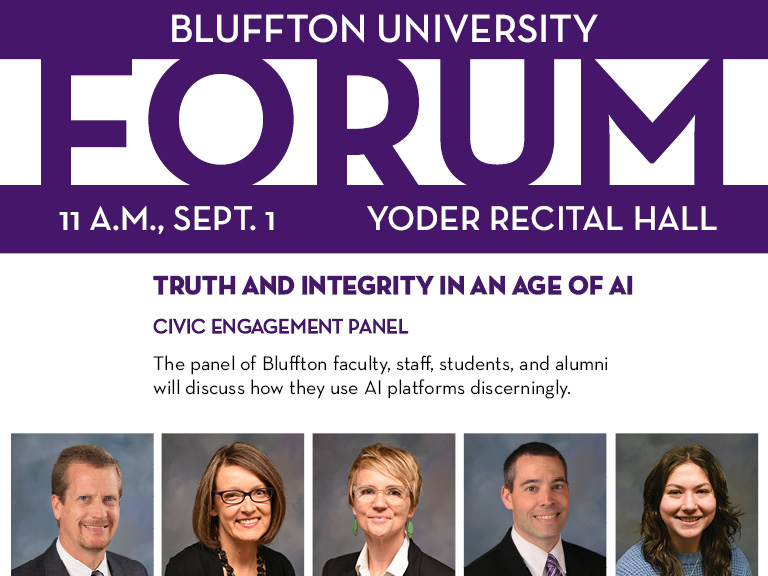
Civic Engagement Forum
Bluffton University will examine the challenges and opportunities surrounding artificial intelligence during its Civic Engagement Theme Panel, "Truth and Integrity in an Age of AI.
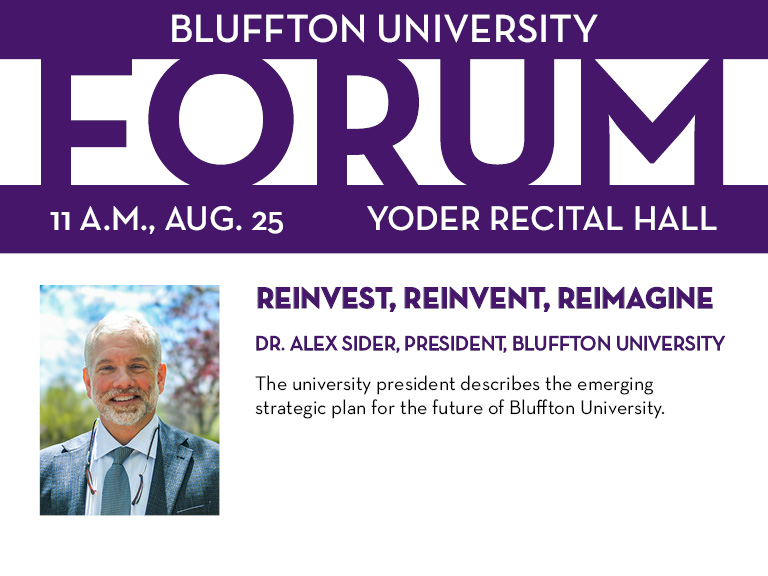
State of the University
Bluffton University President Dr. Alex Sider will present the State of the University Address Tuesday, Aug. 25.
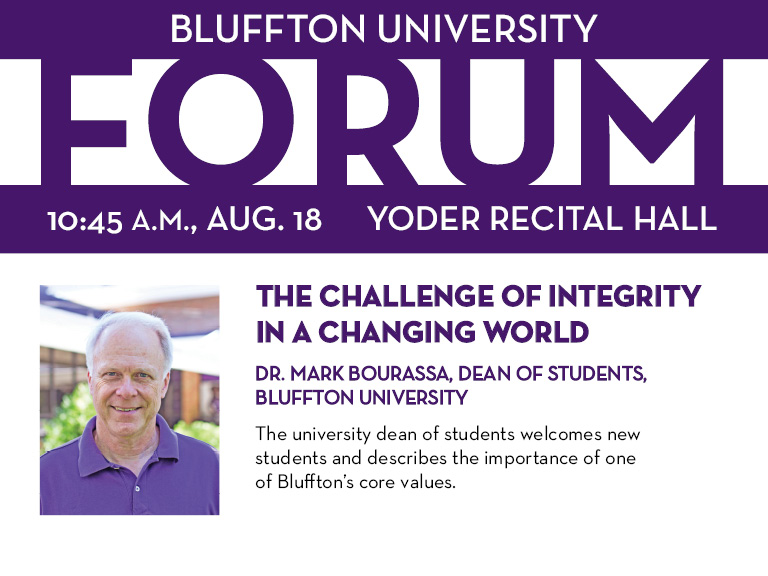
Opening Convocation Forum
Bluffton University will open the fall semester with its Opening Convocation Tuesday, Aug. 18. Dr. Mark Bourassa, dean of students, Bluffton University, will present "The Challenge of Integrity in a Changing World."
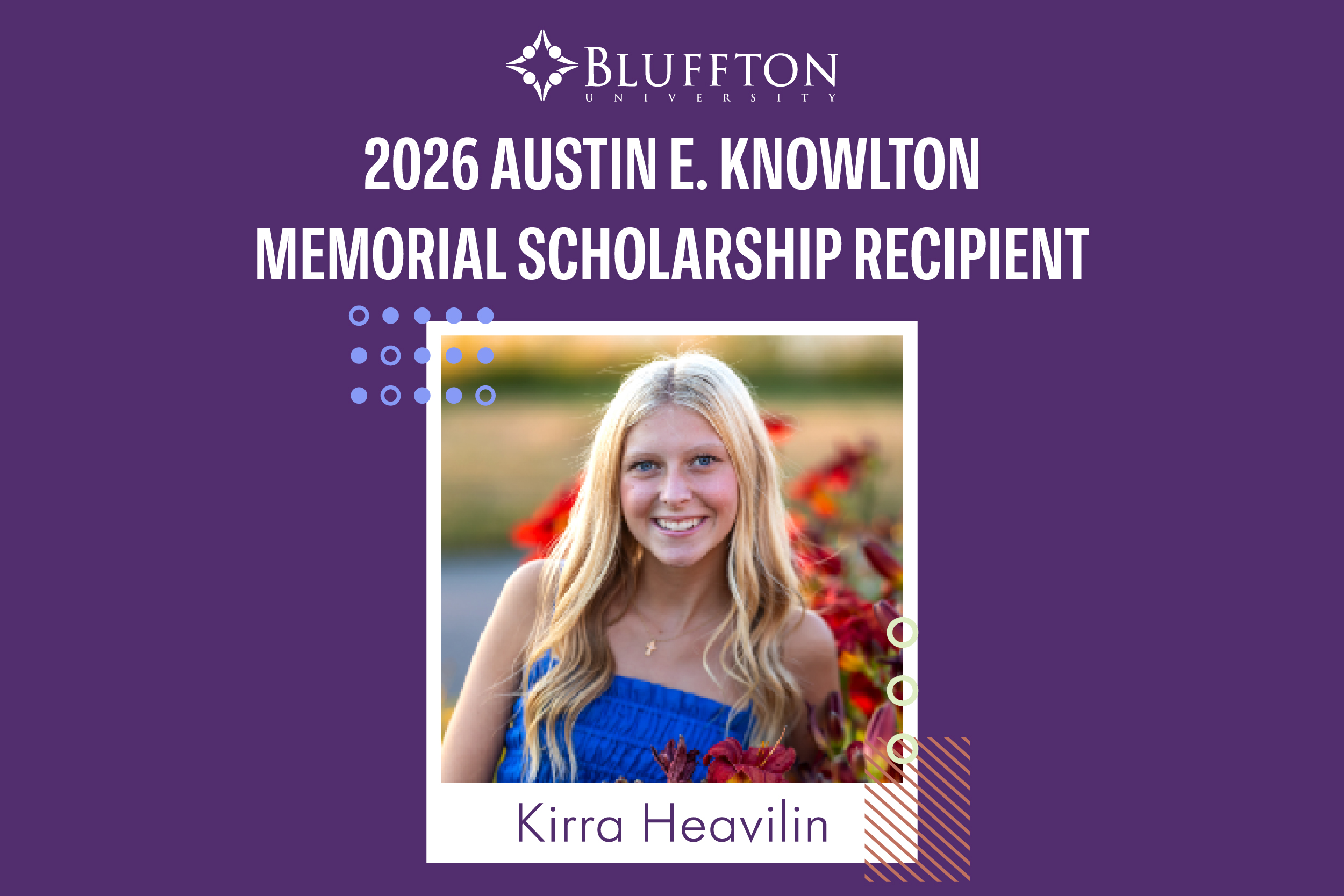
Knowlton Scholarship Awarded
Kirra Heavilin, an incoming student at Bluffton University, has been awarded the university's Austin E. Knowlton Memorial Scholarship, valued at more than $16,000 over four years
Vocation Across Academy
Bluffton University is pleased to announce it has received a $65,000 Vocation Across the Academy Grant from the Network for Vocation in Undergraduate Education.
Choose Ohio First Grant
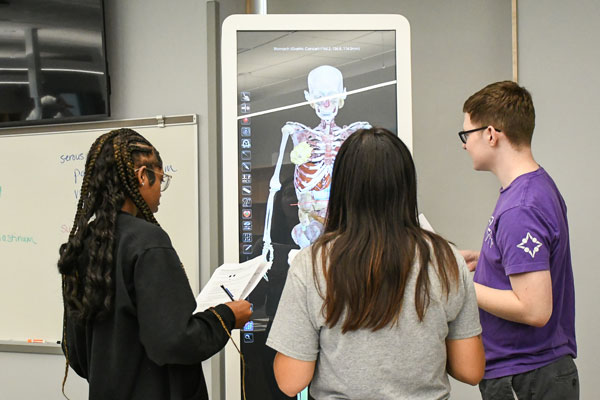
Bluffton University has been awarded a Choose Ohio First grant by the Ohio Department of Higher Education to support students in critical STEM fields.
Ohio Behavioral Health Scholarship
Bluffton University has been awarded $450,000 through the Ohio Behavioral Health Scholarship program, a statewide initiative designed to increase the number of licensed behavioral health professionals.
Faculty Promotion and Board Recap
During its June meeting, the Bluffton University Board of Trustees approved a faculty promotion and received updates on the university's academic programs, enrollment, finances and strategic initiatives.
OMC Welcomed
Bluffton University will host the Ohio Mennonite Conference Annual Conference Assembly on July 31-Aug. 1, 2026, welcoming delegates, church leaders and attendees from across the region.

MBA Program Streamlined
Bluffton University has redesigned its MBA program to make earning an advanced degree faster, more flexible and more accessible for today's working professionals.

Recycle Ohio Grant
Bluffton University has been selected to receive funding through the 2026 Recycle Ohio Grant Program administered by the Ohio EPA Office of Environmental Education.
Spring Dean's List
Bluffton University has announced its Dean's List for the Spring 2026 semester.
Dr. Mary Robinson named VPAA
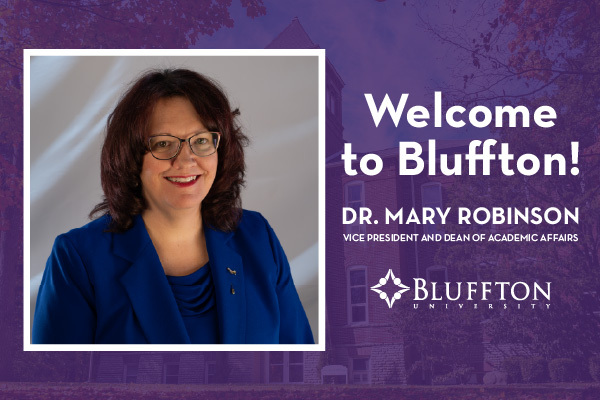
Dr. Mary Robinson has been named vice president and dean of academic affairs at Bluffton University, effective July 1, 2026.
JustWrite Competition
More than 400 high school writers from across Ohio and Michigan will gather at Bluffton University on Monday, May 18, for the JustWrite State Tournament.
Dedicated Service
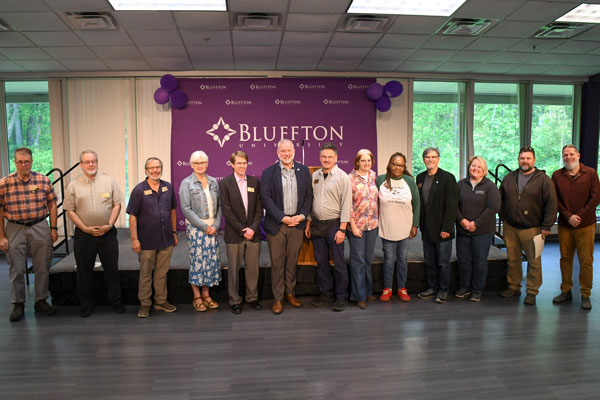
Dr. Alex Sider, president of Bluffton University, and Bluffton University Cabinet recognized faculty and staff for milestone years of service during the annual faculty and staff recognition lunch.
Dean's Reception
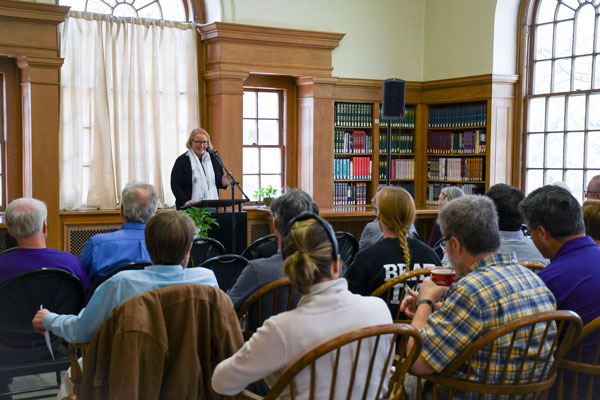
Bluffton University recognized faculty scholarship, professional development and institutional contributions during its annual Dean's Reception.
Academic Awards Recap
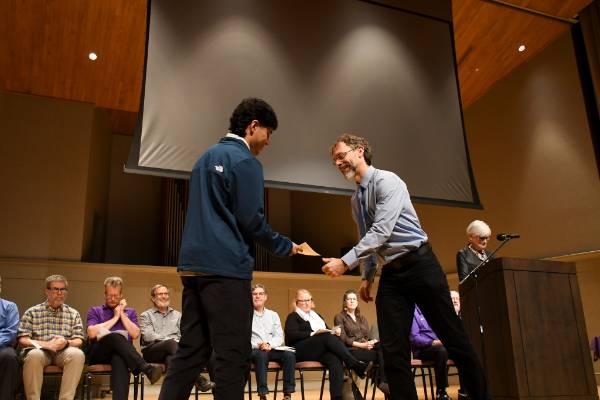
Bluffton University recognized student achievement, scholarship and academic excellence during the annual Academic Awards and Honors Forum