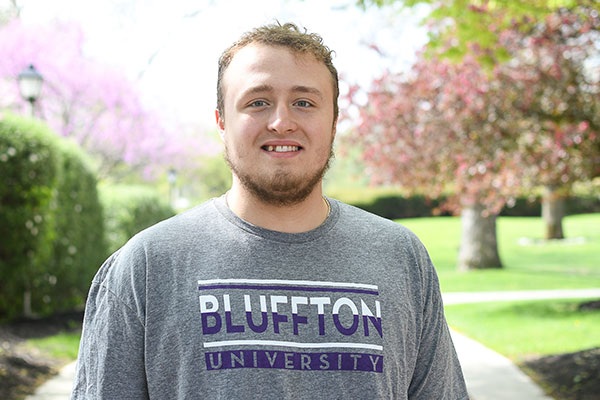

More about Martina
History
Historians need a variety of skills to effectively interpret the past to the present. They must be critical thinkers, excellent writers and adept oral communicators. They need to analyze and evaluate historical data, and come up with interpretations of their own which are consistent with the evidence they have uncovered.
At Bluffton, you will develop each of these skills and more with the help of Fulbright scholars, published authors and historians teaching your classes and preparing you for your next steps. In addition, our history professors approach the study of history in conversation with the university’s Mennonite peace church heritage.
Majors |
Minors |
History major/minor

One of the virtues of the history major at Bluffton is its flexibility. Requiring a total of 40 semester hours, the major itself remains small enough to combine with another major or a combination of minors to speak to your individual career interests.

“I enjoy history and research so much,” said Lenny Winiarski. “Find something you enjoy and you’ll do well in college.”

Cierra Long ’23 a history major from Urbana, Ohio, has always been fascinated by history.
“While the other kids played outside, I stayed in the house and listened to stories from my grandparents about their childhood,” explained Long. ”
EXPLORE COURSES IN THE
history major
history minor
Complete a major in history in four years with with the following guidelines
History classes at Bluffton are frequently revised to reflect new sources and interpretations. As a history major, you will be encouraged to intern with a local or state historical agency or museum. Advanced students may assist professors with research projects and will be encouraged to complete departmental honors research projects.
While the history major remains excellent training for law school, students aiming for a career in law-related fields can major in any number of areas. Students interested in a career in law are strongly recommended to complete the pre-law minor.
With a history major, your career options are numerous. You will be prepared to enter careers in business, secondary education or voluntary service, or graduate programs in history, law and library science. >>>occupational outlook
This major can be completed in three years if you are a dedicated and ambitious student.
Teaching licensure
Explore courses required for
Integrated social studies (grades 7-12)
Middle childhood education (grades 4-9)
Complete your studies in four years with with the following guidelines
Integrated social studies
Middle childhood education even years
Pre-law minor
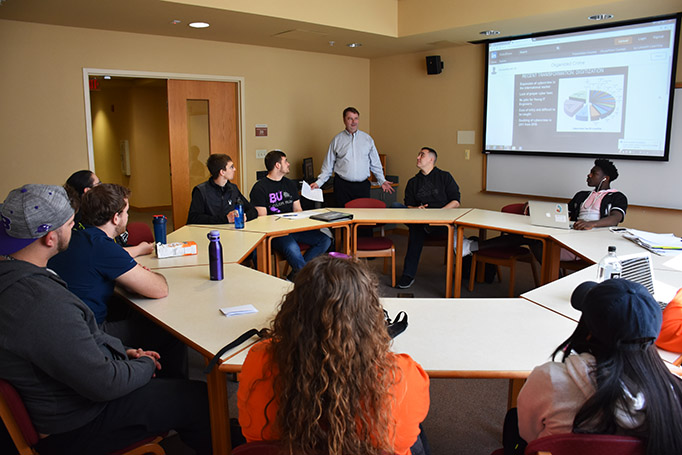
At Bluffton, we believe that the best preparation for a legal career is a broad background in the liberal arts.
Explore courses required in the
Pre-law minor
When law schools assess candidates for admission, they are most interested in an applicant's grades, letters of recommendation and scores on the Law School Admissions Test (LSAT). Most commonly, Bluffton students heading for law school have majored in communications, criminal justice, economics or history. Sometimes they have combined these majors into a double-major, or with a minor in peace and conflict resolution.
Bluffton's pre-law minor emphasizes the historical, political, social and economic foundations of society, while providing you with the skills you need in research, writing, communication, critical thinking and conflict transformation.
International studies minor
Explore courses required in the
International studies minor
History faculty



Strong relationships
“Every class with the Bluffton history professors is something brand new. Their knowledge of history, whether it’s American, world or religious, is just out of this world.”