Art scholarships

Bluffton offers three $1,000 art scholarships to promising and talented first-year students. A portfolio of artwork is required for art scholarship consideration. Deadline for portfolio submission is March 1, 2013.

The scholarships are renewable for three years for art majors maintaining a 2.5 GPA.

To submit your portfolio for consideration

Or for more information, contact
Gregg Luginbuhl
department chair
419-358-3249
luginbuhlg@bluffton.edu

What is a portfolio?

A portfolio represents your skills as an artist, including craftsmanship, technique, creativity and the ability to communicate visual ideas. High school seniors use portfolios to gain admission to art schools and portfolio scholarships. Professionals use them to gain employment.

What should be in a portfolio?

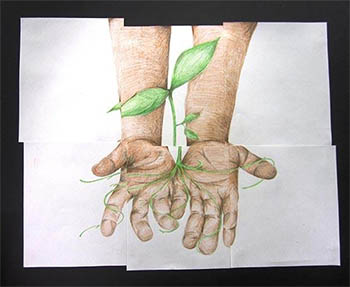
  1. Drawings from life emphasizing an understanding of light, shadow, composition, perspective, technique and value.
  2. Figure/Portrait studies showing an understanding of the human form. May be completed in a variety of media, as illustrations or as fine art pieces.
  3. Paintings in any media (oil, acrylic, watercolor, tempera) showing the ability to mix color and understand form. Demonstrate a familiarity with a variety of media and concepts, including both a realistic and an abstract approach.
  4. Designs showing skills in using color, shape and composition and the ability to think symbolically. May be a poster design, symbol design, logo, abstract exercise, etc.
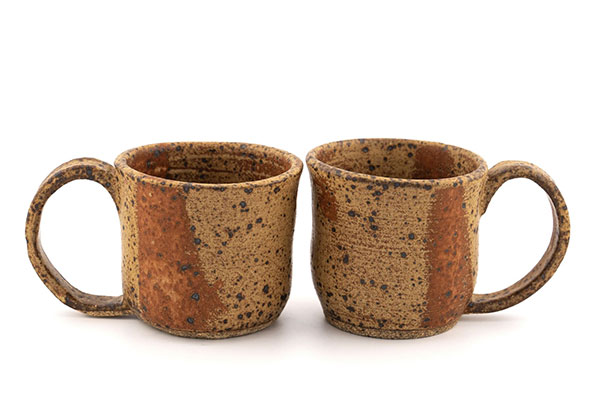
  5. Three-dimensional designs demonstrating the ability to work with sculptural concepts. Ceramic works, hand-formed or from the wheel.
  6. Personal choices highlighting your special abilities and skills. May include photography, crafts, jewelry, printmaking, commercial art, interior & environmental design, lettering, ceramics, etc.
  7. Personal sketchbooks and preliminary studies can be included to show your thought processes in developing your final pieces. These reflect your motivation, creativity and genuine interest.

Why these items?

Your portfolio should be a collection of your best efforts, showcasing your individual artistic style. It should include 10 to 20 pieces of finished work using various media, styles and ideas.  For admission to an art school or a portfolio scholarship, your portfolio should show your potential to handle college-level art study.

Drawing is the most basic way an artist communicates and it remains so regardless of major or career choice. Interior designers, sculptors, even photographers rely on drawing to do their jobs efficiently and well.  Your ideas and skills as an artist are reflected in your drawings.  Hence, your portfolio should include your very best drawings. Your art teacher can help you in selecting your very best work. Whenever possible, include drawings made from observation, like self-portraits, portraits, figure drawings, still lifes, and landscapes.  Work from familiar objects and/or surroundings, and always refer to subjects that have meaning to you personally.  A strong portfolio always exhibits a personal point-of-view. Your portfolio should also demonstrate your use of color.  Such color work can be accomplished in many ways, but strong painting (oil, watercolor, acrylic) will inevitably enhance your portfolio. You may also submit pastels and drawings in other color media such as colored pencil or marker.

Composition/Design – the arrangement of shapes and forms on a page or within the boundaries of a three-dimensional artwork – should be evident throughout your portfolio. By selecting your most interesting and accomplished pieces, your sense of design will clearly be evident. Try to avoid including too many pieces depicting centered objects on a page, as this type of composition is all too common. Avoid drawings and paintings inspired from photographs, especially someone else’s photograph; it is too easy to simply copy photographs.  Rather, concentrate on the familiar in your own environment. This will ensure creative and personal compositions. Don’t submit drawings or paintings of “anime’, super-hero’s, or copies of cartoon characters unless they are your own designs.

How do I prepare my portfolio for presentation?

  1. Your work should be presented in a neat and organized way.
  2. All artwork should be signed. If you are delivering a portfolio folder and original works, your name and address should be on the outside of the portfolio folder or case.
  3. We also accept image Cd’s or flash drives.
  4. You may submit actual work along with your Cd if you think it will enhance your chances for admission.  Sketchbooks, for example, can be a strong addition to any digital portfolio.
  5. When including actual artwork, consider using white or neutral colored mats.  However, mats are not required.
  6. Jpg images should only show the artwork itself, no background unless the image is of a 3-D object. In that case, the background should be solid and neutral.
  7. Each image in the Cd should be numbered to coordinate with an inventory list.
  8. An inventory list describes each piece and should accompany your CD: List your name, title, media, size, and date completed. 

Some advice on shooting digital images

  1. Use a good 35mm camera with a 50 mm lens. 50 mm shows no distortion and is close to the way the human eye sees. One of the small digital point and shoot cameras will also work. Don’t shoot a portfolio with a phone camera.
  2. Daylight is the best light to shoot artwork. If you don’t use daylight, use tungsten light to photograph your work.  Don’t photograph under florescent light.  And, don’t use a flash.
  3. Consult your art teacher, a professional photographer, or your local camera store owner for advice.
  4. Photograph each piece individually.
  5. The piece should completely fill the camera frame. Your camera should be perpendicular to the artwork. If the piece does not fill the frame, download the image and crop it in to the edges of the artwork. Crop out any matting and framing.  Use a neutral background for 3-D pieces.
  6. Never photograph through glass.
  7. Don’t digitally enhance the image in any way. You can color correct to match the original piece.
  8. Most importantly, take your time. Re-shoot if necessary. Select the best shots – those that truly represent your work.
  9. If you are sending an image CD, make sure to include a hard copy of  information for each piece of art work.

Other things to remember

  1. Familiarize yourself with the various deadlines you're facing, especially scholarship deadlines.
  2. Be sure to complete all steps of the application procedures.
  3. Do not submit more work than is necessary.
  4. Finally, seek advice from knowledgeable professionals when organizing your admissions portfolio, but remember your portfolio represents who you are and what you can do.
 If you have any questions, please contact one of the art faculty at Bluffton University.